
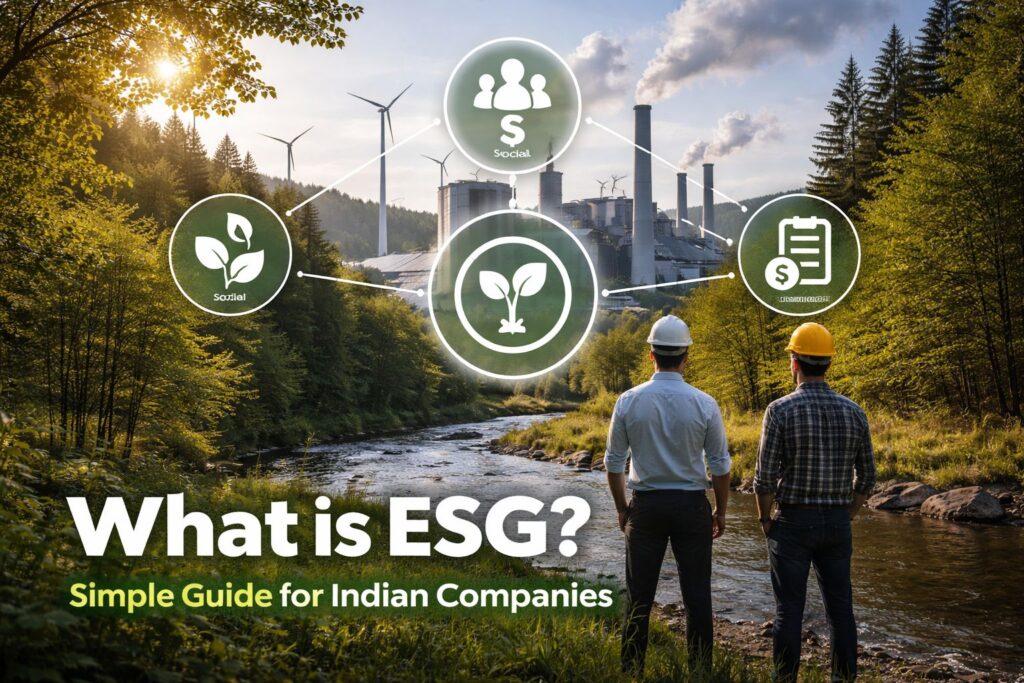
In our previous discussion, we explored why sustainability is becoming increasingly important.
Now, let’s focus on a term that is gaining significant attention across industries:
👉 ESG
At first glance, ESG may sound technical. However, once understood, it is straightforward—and highly relevant for your business.
What Does ESG Mean?
ESG stands for:
- E – Environmental
- S – Social
- G – Governance
In simple terms:
👉 ESG is a framework used to evaluate how responsibly a business operates.
It goes beyond profitability and examines:
- Environmental impact
- Social responsibility
- Business ethics and management practices
Breaking ESG Down (In Simple Terms)
🌱 Environmental (E)
This focuses on how your business impacts the environment.
Key areas include:
- Energy consumption
- Water usage
- Waste management
- Pollution control
👉 For example, if your factory reduces energy usage or minimizes waste, you are strengthening your ESG performance.
👥 Social (S)
This relates to how your business treats people.
Key areas include:
- Employee health and safety
- Working conditions
- Fair wages
- Community engagement
👉 A workplace that prioritizes employee well-being reflects strong ESG practices.
🏢 Governance (G)
This focuses on how your business is managed and operated.
Key areas include:
- Transparency in operations
- Ethical business practices
- Proper documentation
- Compliance with laws and regulations
👉 Well-structured systems and ethical governance indicate that your business is ESG-ready.
ESG vs Sustainability – Understanding the Difference
This is a common area of confusion.
- Sustainability = The broader concept (your intent and approach)
- ESG = The measurement framework (how you track and demonstrate it)
Think of it as:
- Sustainability: “We operate responsibly.”
- ESG: “Here is measurable proof of our responsible practices.”
Why ESG is Becoming Important in India
ESG is no longer optional—it is becoming a critical business factor.
1. Increasing Demand from Large Corporates
Major companies now prefer vendors and partners who follow ESG practices.
2. Export Market Requirements
Global buyers are demanding transparency and responsible sourcing, making ESG essential for exporters.
3. Investor Expectations
Investment and funding decisions are increasingly influenced by ESG performance.
4. Regulatory Developments
India is gradually moving toward more structured ESG reporting and compliance frameworks.
Real-World Example (Simplified)
Consider a manufacturing unit in Rajasthan:
Without ESG:
- High energy consumption
- No waste tracking
- Lack of safety documentation
With ESG:
- Energy usage is monitored and optimized
- Waste is properly managed
- Worker safety is documented and ensured
👉 Naturally, global clients and partners will prefer the ESG-compliant business.
Common Myth: “ESG is Only for Large Companies”
This is a misconception.
Today:
- Mid-sized businesses are also expected to adopt ESG practices
- Suppliers are increasingly evaluated on ESG criteria
👉 ESG expectations are extending across the entire supply chain.
Challenges Businesses Commonly Face
Many organizations feel:
- “There is too much data to manage”
- “We don’t know what to track”
- “The process seems complicated”
These concerns are valid—because ESG is not just a concept, but a structured and systematic approach.
How to Start ESG (A Practical Approach)
You don’t need to implement everything at once. A phased approach works best:
- Identify key areas (energy, waste, workforce, compliance)
- Begin basic data tracking
- Implement gradual improvements
- Build proper documentation
👉 A step-by-step strategy ensures sustainable and manageable progress.
How Detroit Consultancy Supports Your ESG Journey
Detroit Consultancy works with businesses across Rajasthan, Uttar Pradesh, NCR, and India to simplify ESG implementation.
We help you with:
- ESG awareness and structured implementation
- Data collection and organization
- Compliance readiness
- Integration with certifications and export requirements
Our approach focuses on clarity, practicality, and business alignment—without unnecessary complexity.